
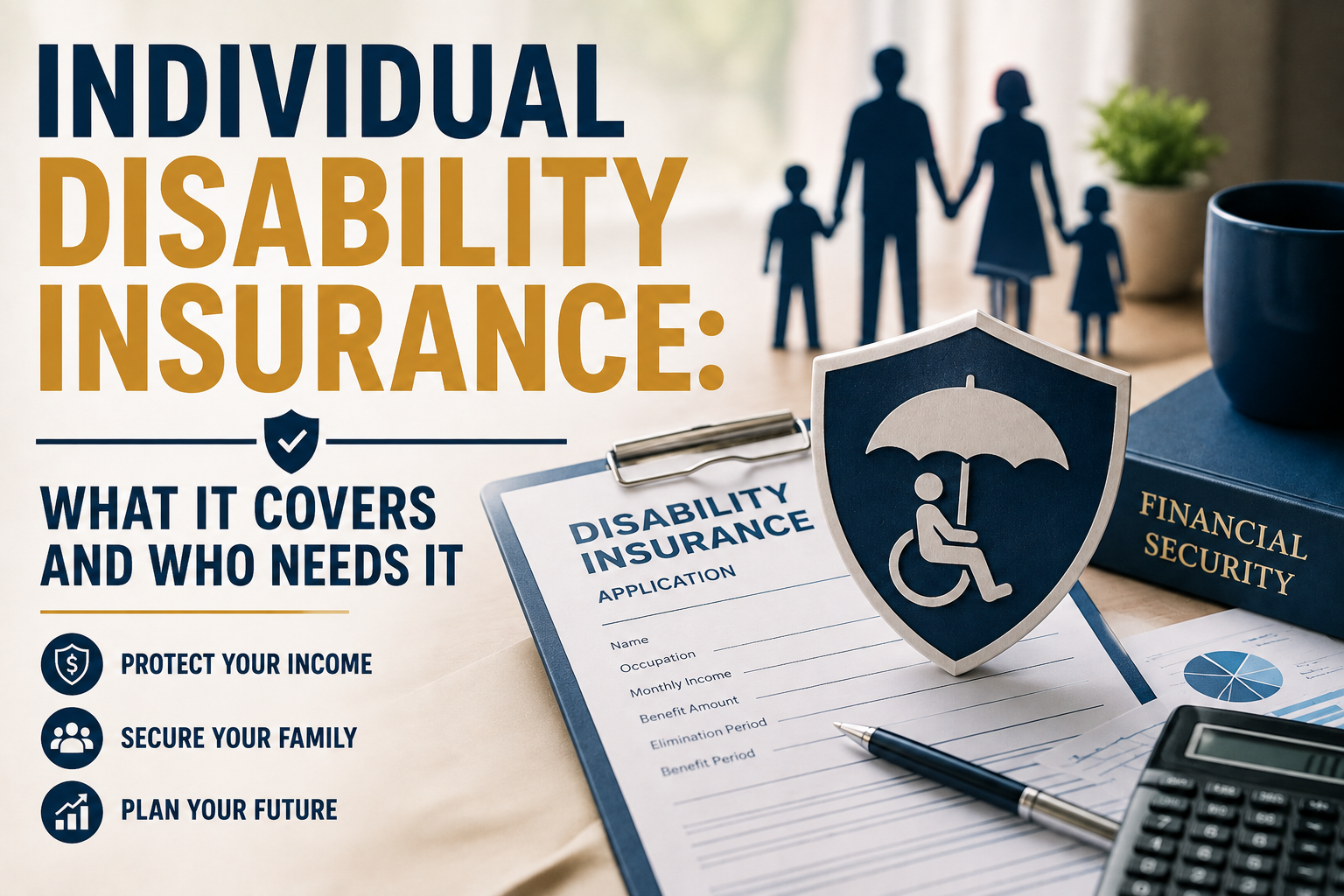
Your ability to earn an income is one of your most valuable financial assets, yet it’s often one of the most overlooked. Individual disability insurance helps protect your income if an illness or injury prevents you from working, giving you financial support while you recover. Whether you’re a salaried employee, self-employed professional, or business owner, having the right disability insurance can help you continue meeting your financial obligations when your paycheck is interrupted.
The need for income protection is greater than many people realize. More than one in four 20-year-olds will experience a disability lasting at least one year before reaching retirement age. A prolonged loss of income can make it difficult to cover everyday living expenses, mortgage payments, healthcare costs, and retirement contributions. Having income protection insurance in place can help reduce financial stress during an already challenging time.
This guide explains what individual disability insurance covers, how it works, who can benefit from it, and why it plays an important role in a comprehensive financial plan. By understanding your coverage options, you’ll be better prepared to protect your income and your long-term financial future.
What Is Individual Disability Insurance?
Individual disability insurance is a policy you purchase directly from an insurance provider to help replace a portion of your income if you’re unable to work because of a covered illness or injury. Unlike employer-sponsored disability benefits, an individual policy belongs to you, allowing you to keep your coverage even if you change jobs or become self-employed.
Rather than replacing your entire salary, a disability insurance policy typically pays a percentage of your pre-disability income for a specified benefit period. These monthly benefits can help you continue paying essential expenses while focusing on your recovery.
For many professionals, individual disability insurance serves as an important part of a broader financial strategy alongside life insurance, retirement planning, and emergency savings.
How Individual Disability Insurance Works
Although every policy is different, most individual disability insurance plans follow a similar structure.
When you purchase coverage, you’ll select key policy features, including:
- Monthly benefit amount
- Elimination (waiting) period before benefits begin
- Benefit period
- Coverage options and riders
- Premium amount
If you become unable to work because of a covered disability and satisfy your policy’s requirements, the insurer pays monthly benefits for the duration of your approved claim or until your benefit period ends.
Understanding how disability insurance works helps you choose coverage that aligns with your occupation, income, and financial responsibilities.
Individual vs. Employer Coverage
Many employers offer disability insurance as part of their employee benefits package, but employer-sponsored coverage isn’t always enough to provide adequate income protection.
An individual disability insurance policy offers several advantages:
- Coverage that remains with you if you change employers
- Greater flexibility when selecting benefit amounts and policy features
- Options to customize coverage with additional riders
- Protection that isn’t tied to your employment status
Employer plans can still provide valuable benefits, but many professionals supplement them with an individual policy to strengthen their overall disability insurance coverage.
What Does Individual Disability Insurance Cover?
The purpose of individual disability insurance is to help replace lost income when a covered medical condition prevents you from performing the duties of your occupation. Coverage varies by policy, so it’s important to review the terms carefully before purchasing a plan.
Most policies cover disabilities resulting from illnesses, injuries, or other qualifying medical conditions that significantly limit your ability to work.
Covered Disabilities
Depending on your policy, disability insurance coverage may include disabilities caused by:
- Serious illnesses
- Accidental injuries
- Musculoskeletal conditions
- Certain neurological disorders
- Some mental health conditions, subject to policy terms
- Pregnancy-related complications, when covered by the policy
Every insurance provider defines covered disabilities differently, making it important to understand the policy’s eligibility requirements, exclusions, and waiting periods before selecting coverage.
Expenses Disability Insurance Can Help Cover
Receiving monthly disability insurance benefits can make it easier to manage everyday financial responsibilities while you’re unable to earn your regular income.
Benefits may help you pay for:
- Mortgage or rent payments
- Utility bills
- Groceries and household expenses
- Car payments
- Health insurance premiums
- Medical expenses not covered by health insurance
- Childcare costs
- Loan payments and other recurring financial obligations
Rather than worrying about how to replace your income during recovery, income protection insurance provides financial stability that allows you to focus on your health. For many individuals and families, it serves as an essential safeguard within a comprehensive financial plan.
Types of Disability Insurance
Not all disability insurance policies provide the same level of protection. Understanding the difference between short-term disability insurance and long-term disability insurance can help you choose coverage that aligns with your financial responsibilities and recovery needs. Some individuals may benefit from one type of policy, while others may choose to combine both for more comprehensive income protection insurance.
Short-Term Disability Insurance
Short-term disability insurance is designed to replace a portion of your income if you’re temporarily unable to work because of a covered illness or injury. Benefits typically begin after a short waiting period and continue for several weeks or months, depending on the policy.
This type of coverage is commonly used for situations involving:
- Recovery after surgery
- Temporary illnesses
- Pregnancy and childbirth recovery, when covered by the policy
- Non-permanent injuries
- Short-term medical conditions that prevent you from working
Because benefits begin relatively quickly, short-term disability insurance can help cover everyday expenses while you’re recovering and preparing to return to work.
Long-Term Disability Insurance
When a disability extends beyond the coverage period of a short-term policy, long-term disability insurance provides ongoing financial protection. Depending on the policy, benefits may continue for several years or until retirement age if you remain unable to work due to a qualifying disability.
Long-term disability insurance often becomes an important part of both individual disability insurance and broader financial planning, especially for professionals whose income supports their family’s lifestyle or long-term financial goals.
Long-term disability insurance may be particularly valuable for individuals who:
- Have significant monthly financial obligations
- Support dependents
- Own a business
- Work in specialized professions requiring physical or cognitive abilities
- Want long-term income replacement insurance
Many people choose to combine short-term and long-term disability insurance to create more complete income protection throughout different stages of recovery.
Who Needs Individual Disability Insurance?
Many people assume disability insurance is only necessary for individuals with physically demanding jobs. In reality, an illness or injury can affect professionals in almost any occupation. If your lifestyle depends on your ability to earn an income, individual disability insurance deserves serious consideration.
Whether you’re just starting your career or preparing for retirement, protecting your earning potential helps strengthen your overall financial security.
Professionals Who Benefit Most
Although almost anyone with earned income can benefit from disability coverage, certain professions often face greater financial risks if they’re unable to work.
Business owners
Business owners often carry significant financial responsibilities beyond their personal income. In addition to supporting their families, they may need to cover payroll, operating expenses, or business loans. Disability insurance for business owners can help provide personal income protection while supporting long-term financial stability.
Self-employed professionals
Freelancers, consultants, and entrepreneurs generally don’t have access to employer-sponsored disability benefits. Disability insurance for self-employed individuals provides valuable protection because a temporary disability can immediately interrupt their income.
Healthcare professionals
Physicians, dentists, nurses, and other healthcare providers rely on specialized skills that may be affected by illness or injury. Individual disability insurance can help protect their income during recovery.
Attorneys, accountants, and engineers
Professionals in technical or advisory roles often depend on cognitive abilities and consistent productivity. Even conditions that don’t prevent physical activity may temporarily affect their ability to perform their work.
High-income earners
Individuals with higher incomes often have larger financial commitments, including mortgages, education expenses, investments, and retirement savings goals. Replacing a portion of that income through individual disability insurance can help reduce financial disruption.
Families relying on one income
Households that depend primarily on one income may experience significant financial hardship if that income suddenly stops. Disability insurance benefits can help maintain financial stability while the insured individual focuses on recovery.
Why Income Protection Matters at Every Career Stage
Your financial responsibilities evolve throughout your career, but the importance of protecting your income remains constant.
Early in your career, disability insurance can help you continue paying student loans, rent, and everyday living expenses. As your income grows, it helps safeguard larger financial commitments such as mortgages, childcare costs, and retirement contributions. Later in life, protecting your earnings can help preserve retirement savings and reduce the need to draw from long-term investments during an unexpected disability.
Reviewing your individual disability insurance needs whenever you experience major life events, such as changing careers, starting a business, getting married, or having children, helps ensure your coverage continues to reflect your financial situation.
Individual Disability Insurance vs. Employer Disability Insurance
Employer-sponsored disability coverage can provide valuable protection, but it isn’t always enough to fully replace your income. Comparing the two options can help you determine whether supplemental coverage is appropriate.
| Feature | Individual Disability Insurance | Employer Disability Insurance |
| Ownership | You own the policy | Employer owns the policy |
| Portability | Remains with you if you change jobs | Usually ends when employment ends |
| Coverage | Can be customized to your needs | Often limited by employer benefits |
| Benefit Amount | Based on selected coverage | Determined by the employer plan |
| Flexibility | Optional riders and personalized features | Limited customization |
| Premiums | Paid by the policyholder | Often employer-paid or shared |
Many professionals choose both forms of coverage. Employer benefits provide a valuable foundation, while individual disability insurance offers additional disability insurance coverage that stays with you throughout your career, regardless of where you work.
How Much Disability Insurance Do You Need?
The right amount of individual disability insurance depends on your income, monthly expenses, financial responsibilities, and existing benefits. Since most disability insurance policies replace only a percentage of your income rather than your full salary, choosing an appropriate benefit amount is essential to maintaining financial stability during a disability.
While every situation is different, the goal of income protection insurance is to help you continue meeting your financial obligations without relying solely on savings or retirement accounts.
Factors That Affect Your Coverage Needs
Several factors should be considered when determining how much disability insurance coverage you need.
Monthly income
Your earnings are the foundation of your coverage. Higher-income professionals often require larger benefit amounts to maintain their standard of living during an extended absence from work.
Essential living expenses
Calculate your recurring monthly costs, including:
- Mortgage or rent
- Utilities
- Groceries
- Transportation
- Insurance premiums
- Childcare
- Loan payments
- Healthcare expenses
Understanding these obligations helps determine the level of income replacement insurance that may be appropriate.
Existing disability benefits
Review any disability coverage offered through your employer. While employer-sponsored plans provide valuable protection, they may replace only a portion of your income and may not remain in place if you change jobs.
Family responsibilities
If your spouse, children, or other dependents rely on your income, additional individual disability insurance may help provide greater financial security during an extended recovery.
Emergency savings
A healthy emergency fund can help cover short-term expenses, but longer disabilities may quickly deplete those savings. Disability insurance provides ongoing income replacement that helps preserve your emergency reserves.
Understanding Disability Insurance Costs
The cost of a disability insurance policy varies based on several factors, including:
- Age
- Overall health
- Occupation
- Annual income
- Benefit amount
- Elimination period
- Benefit period
- Optional riders
Because premiums are generally based on risk, purchasing individual disability insurance earlier in your career may result in lower costs than waiting until later in life.
Although cost is an important consideration, it shouldn’t be the only factor when comparing policies. Evaluating disability insurance benefits, coverage limits, exclusions, and policy flexibility can help you choose a solution that provides lasting value.
Common Disability Insurance Riders
Many individual disability insurance policies allow you to customize your coverage through optional riders. These additional features can strengthen your disability insurance policy by providing extra flexibility and protection based on your occupation and financial goals.
Cost of Living Adjustment (COLA) Rider
A COLA rider increases your monthly disability benefit over time to help offset inflation during a long-term disability.
Own Occupation Rider
This rider provides benefits if you’re unable to perform the duties of your specific occupation, even if you’re capable of working in another profession. It is particularly valuable for physicians, attorneys, engineers, and other specialized professionals.
Residual Disability Rider
If you’re able to return to work part-time but experience a reduction in income because of a disability, this rider may provide partial benefits to help replace the lost earnings.
Future Purchase Option Rider
As your income grows throughout your career, this rider allows you to increase your disability insurance coverage without undergoing another medical examination, subject to the policy’s terms.
Catastrophic Disability Rider
This rider provides additional financial protection if a severe disability results in significant long-term care needs or the inability to perform basic daily activities.
Selecting the right riders depends on your occupation, income, lifestyle, and long-term financial objectives. Reviewing these options with an experienced insurance advisor can help ensure your policy provides the protection you need.
Common Mistakes to Avoid When Buying Disability Insurance
Purchasing individual disability insurance is an important step toward protecting your financial future, but certain mistakes can reduce the value of your coverage.
Waiting too long to purchase coverage
Many people delay buying disability insurance until later in their careers. However, purchasing coverage while you’re younger and healthier may increase your eligibility and result in more affordable premiums.
Relying only on employer coverage
Employer-sponsored disability insurance can provide valuable benefits, but it may not replace enough income or remain with you if you change employers. An individual policy offers greater portability and flexibility.
Choosing coverage based only on price
Lower premiums may seem attractive, but they can come with lower benefit amounts, shorter benefit periods, or fewer policy features. Compare the overall value of each disability insurance policy, not just the monthly cost.
Ignoring policy exclusions
Every policy contains exclusions and limitations. Understanding what’s covered and what isn’t helps you avoid unexpected surprises when filing a claim.
Failing to review your coverage
Your income and financial responsibilities change over time. Reviewing your individual disability insurance after major life events, such as a promotion, marriage, starting a business, or having children, helps ensure your coverage continues to meet your needs.
How to Choose the Right Disability Insurance Policy
Choosing the right individual disability insurance policy involves more than selecting a monthly benefit amount. The policy should reflect your occupation, financial responsibilities, and long-term goals.
Questions to Ask Before Purchasing Coverage
Before purchasing a policy, consider asking:
- How much of my income will this policy replace?
- How long is the elimination period before benefits begin?
- How long will benefits continue if I remain disabled?
- Does the policy include an own-occupation definition of disability?
- Which optional riders would strengthen my coverage?
- Are there exclusions or limitations I should understand?
- Will this policy continue to meet my needs as my career progresses?
Taking the time to compare disability insurance benefits, policy features, and coverage options can help you choose a solution that protects both your income and your long-term financial future.
Individual Disability Insurance Checklist
Choosing the right individual disability insurance policy is an important step toward protecting your income and long-term financial security. Use these questions to determine whether your current coverage aligns with your financial needs and career goals.
- Do I have enough disability insurance to replace a portion of my income?
- Would my emergency savings cover several months without a paycheck?
- Do I rely solely on employer-sponsored disability coverage?
- Have I reviewed my disability insurance policy within the past year?
- Does my current coverage reflect my income and financial responsibilities?
- Have I considered optional riders that could strengthen my policy?
- Do I understand my policy’s waiting period and benefit period?
- Have I updated my coverage after a major life or career change?
If you answered “No” to any of these questions, it may be time to review your individual disability insurance and determine whether your current disability insurance coverage still meets your needs.
Protect Your Income with Individual Disability Insurance
Your ability to earn an income supports nearly every aspect of your financial life. It helps pay your mortgage, support your family, build retirement savings, and achieve future goals. Protecting that income is just as important as protecting your home, vehicle, or other valuable assets.
At Legacy Partners Insurance, we help individuals, families, and business owners choose insurance solutions that provide financial confidence through every stage of life. Whether you’re looking for personal income protection or a broader financial strategy, our experienced advisors can help you compare policies and understand your options.
Our insurance and financial planning solutions include:
- Life Insurance
- Last Expense / Funeral Insurance
- Universal Life Insurance
- Indexed / Guaranteed Universal Life Insurance
- Disability Insurance
- Long Term Care Insurance
- Dental Insurance
- Business Insurance
- Business Overhead Insurance
- Beverly Hills Estate Planning
- Business Partnership Insurance
- Business Buy/Sell Agreement
- Business Exit Planning
- Financial Planning
- Estate Planning
- Education Planning
- Tax Qualified Retirement Plan
Contact Legacy Partners Insurance today to schedule your personalized disability insurance consultation and find coverage that’s tailored to your career, your family, and your long-term financial goals.
Frequently Asked Questions
1. What is individual disability insurance?
Individual disability insurance is a policy you purchase directly from an insurance provider that replaces a portion of your income if a covered illness or injury prevents you from working.
2. What does individual disability insurance cover?
Disability insurance coverage generally provides monthly income replacement when you’re unable to work because of a qualifying illness or injury. Covered conditions and benefits vary by policy.
3. Who should buy individual disability insurance?
Anyone who depends on earned income can benefit from individual disability insurance, including employees, self-employed professionals, business owners, healthcare providers, attorneys, engineers, and families relying on a primary income earner.
4. What’s the difference between individual and employer disability insurance?
Employer-sponsored disability insurance is tied to your job and often provides limited coverage. Individual disability insurance is owned by you, remains portable if you change employers, and typically offers greater flexibility and customization.
5. How much disability insurance do I need?
The right amount depends on your income, monthly expenses, financial obligations, existing disability benefits, and long-term goals. An insurance advisor can help determine an appropriate level of income protection insurance for your situation.
6. Does disability insurance cover mental health conditions?
Some disability insurance policies provide benefits for qualifying mental health conditions, although coverage limits, exclusions, and benefit periods vary by insurer and policy.
7. How long do disability benefits last?
Benefit periods vary depending on the policy. Short-term disability insurance may provide benefits for several weeks or months, while long-term disability insurance may continue for several years or until retirement age.
8. Can self-employed professionals buy disability insurance?
Yes. Disability insurance for self-employed individuals is available and can provide valuable income protection since independent professionals typically don’t receive employer-sponsored disability benefits.
9. Is individual disability insurance worth it?
For many individuals, yes. If your income supports your household and financial goals, individual disability insurance can help protect against the financial impact of an unexpected illness or injury that prevents you from working.
10. When should I buy disability insurance?
Many people purchase disability insurance early in their careers while they’re younger and healthier. Buying coverage sooner may improve eligibility and help secure lower premiums than waiting until later in life.